-
Bet Lechem – lecture 1
Our new site: Bet Lechem! We Will ask a few questions for a start: Where exactly is the biblical Bet Lechem? Did anything significant happen there in the time of the Bible? Was Rachel really buried in Bet Lechem? We will go through all the verses that mention Bet Lechem in the Bible and begin to analyze the story of Rachel’s burial.
-
Bet Lechem – lecture 2
“Kol Baramah Nishma…” – “A voice was heard in Ramah…Rachel weeping for her sons” Is it possible to learn from this psalm where Rachel was buried? There seem to be two opposite interpretations, both by the same commentator: the Ramban. The first interpretation – Ramah is in the land of Benjamin and Rachel’s sons, for whom she is weeping, are the Kingdom of Israel who are going north to the Babylonian exile. And the second interpretation – Rachel is buried in Bet Lechem in Judah, and only the sound of her weeping reached Ramah. So what does the Ramban really…
-
Bet Lechem – lecture 3
10th of Tevet and Bethlehem The Babylonian exile, which began on the 10th of Tevet, ended with Nebuzaradan deporting the people of Israel to Babylon. This is the same Nebuzaradan who is mentioned in Rashi about Rachel being buried on the road near Bethlehem – so she can pray for her sons, going to exile. But the road from Jerusalem north to Babylon does not pass through Bet Lechem! Therefore – there is an opinion that Bet Lechem is a city in Binyamin! not in Judah! And indeed, archaeological evidence has been found of an ancient tomb near Anathoth in…
-
Bet Lechem – lecture 4
This lecture takes place on December 24, so we will examine the special connection that exists (or does not exist..) between Bet Lechem and the Christian tradition that Jesus was born in Bet Lechem. There seems to be no basis for this tradition, but there are many customs in Jewish tradition that have to do with this night, which is called the “Nitel Nacht”. After examining the customs of “Nitel Nacht”, we will return to the controversy over Rachel’s Tomb and begin to arrange all the different opinions of the commentators in a summary table.
-
Bet Lechem – lecture 5
After seeing Noga Harauveni’s research, with archaeological evidence that Rachel’s tomb is in Binyamin, it seems that there are many traditional interpreters who explain it this way, as well. The name “Efrat” which is identified with Bet Lechem in Judah, according to this, refers to the area of the Ephraim tribe and not to Efrat near Hebron. Or according to another interpreter – to the Euphrates River in Binyamin! This explanation – as we will see – fits very well with the verses in the Book of Nehemiah that mention Bet Lechem in the list of cities of Binyamin!
-
Bet Lechem – lecture 6
We will continue to examine the two suggestions for the location of Rachel’s burial and how each one explains the different verses: If she was buried in Bet Lechem of Judah – will we need to interpret differently: “A voice was heard in Ramah”? We will need to explain that Rachel’s sons who left Jerusalem for exile were on their way south to Egypt! And we will also try to explain the verse in Samuel that explicitly says that Rachel’s burial is in Benjamin! Can this also be explained, if she is buried in Bet Lechem??
-
Bet Lechem – lecture 7
After we have proven at length the two possibilities for Rachel’s burial, we must ask: According to both possibilities, even according to the southern possibility, Rachel was not buried in Bet Lechem! But only on the way.. So apparently Bet Lechem is not important at all? But we will claim that the way Rachel’s burial is described in the Torah proves that Bet Lechem is indeed important. But the importance of the place is always described throughout the Tanach as a place “on the way”, from which people come and return. We will see later what this means..
-
Bet Lechem – lecture 8
Bet Lechem and Tu B`Shvat “A land of wheat and barley and vines…a land of olives and honey (dates)”. In the Laws of Blessings there is a rule about this verse: whatever is closer to the word “land” comes first in the order of blessings. Therefore, olives (closer to the word land) are more important than grapes. We can also learn an important idea from this regarding Bet Lechem: sometimes being close to something important is more important than the thing itself. Bet Lechem’s importance is precisely because it is on the way. As we will expand on later…
-
Bet Lechem – lecture 9
In light of everything we have said – Rachel’s tomb is not in Bet Lechem, but only nearby. So what is special about Bet Lechem itself? A new hypothesis: “Ephrath” is not a city, but a large area, and Jacob buried Rachel in that area, in a place that would later be called Bet Lechem, but at this stage does not exist at all. The place that does exist there is “Migdal Eder” which is later identified with Bet Lechem. A place that symbolizes simplicity and humility which, as we will see, are the central message of Bet Lechem.
-
Bet Lechem – lecture 10
We managed to define the central theme of Bet Lechem: humility, and a focus on the essence rather than on external appearances. The characters identified with Bet Lechem express this theme: Ruth, who is a convert and a Moabite. David, who presents himself to Saul humbly and says: “Who am I that I should be son-in-law to the king,” and I am only a shepherd. And Jacob, who, in order to emphasize this theme, buried Rachel in a simple place on the road . A place, then called “Migdal Eder”, and today the place of kibbutz “Migdal Oz”.
-
Bet Lechem – lecture 11
According to the words of the prophet Micah about Bet Lechem, we can define the message of Bet Lechem as: leadership through humility. A message that is expressed in the famous Midrash about Mount Sinai, which was the lowest and most humble of all mountains. We will now examine this message in all the other verses of Bet Lechem in the Tanach and focus on the story of the prophet Shmuel coming to look for David in Bet Lechem. God teaches him the message of Bet Lechem – not to look at the outward appearance but at the inner essence.
-
Bet Lechem – lecture 12
How does the message of Bet Lechem appear in the song “Lecha Dodi” sung on Shabbat night? And how is the same message also expressed in the two difficult stories that end the Book of Judges? The story of Micah’s statue and the story of the concubine in Givah. We will study the story, try to understand why it appears at the end of the Book of Judges and ask – why is it told and emphasized several times that the boy from whom the whole story began came from Bet Lechem?
-
Bet Lechem – lecture 13
The recurring motif in the story of Micah’s statue and the story of the concubine of Givah is the Levite who comes from Bet Lechem. What does this mean? and why is it emphasized? It seems that both stories that end the Book of Judges and the opening story of the Book of Samuel contain exactly the same elements: a story that opens with a Levite who comes from Bet Lechem and ends in Shiloh. What is the message of this literary structure and how does it relate to the message of Bet Lechem?
-
Bet Lechem – lecture 14
We learned three similar stories. Two lead to the situation: “Every man did what is right in his own eyes.” And the third leads to the kingdom of David, about whom God says: “He who has done what is right in my eyes.” What is the message of this contrast and how does it relate to Bet Lechem? We will also suggest a new theory for the name “Ephrath”: The wife of Caleb! Is this a possible interpretation? And why did David send soldiers to bring water from the well in Bet Lechem. What is special about this well??
-
Bet Lechem – lecture 15
Bet Lechem in the Book of Ruth. It is constantly mentioned that they left Bet Lechem and returned to Bet Lechem? Boaz too, is described as “coming from Bet Lechem.” Why? We learn several things from the Book of Ruth: Bet Lechem represents not only a geographical place but also what is good from a moral and religious perspective. Similar to the Levi at the end of the Book of Judges who left the good place – Bet Lechem. We learn that the “Sanhedrin” was in Bet Lechem. And we even learn that you should say “Shalom” and not “Hi!”
-
Bet Lechem – lecture 16
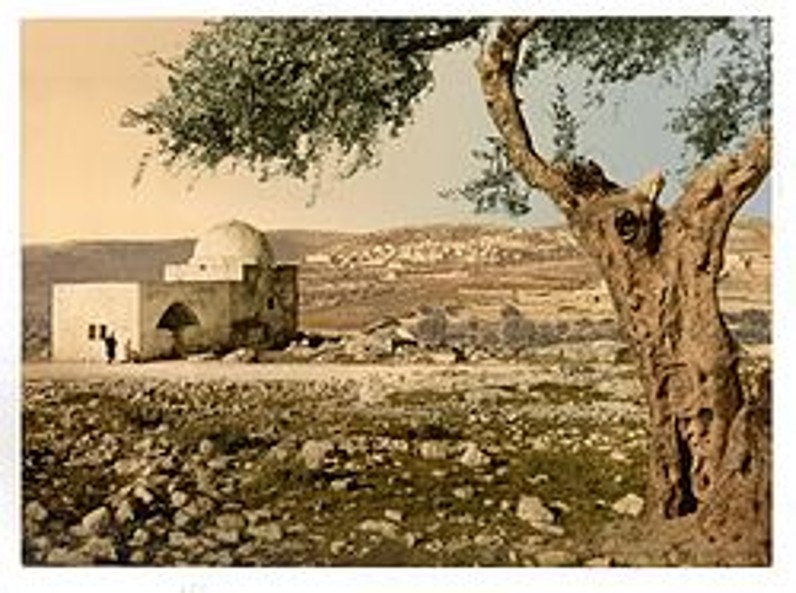
So if we summarize the messages of Bet Lechem that we learned: Bet Lechem epresses a message of humility, of focusing on the essence and not on appearances, a place that symbolizes good, from which those who leave arrive at bad places. It is also a place that symbolizes unity, as the people of Bet Lechem said to Naomi, regarding Ruth: “Like Rachel and Leah, who together built the house of Israel.” We will conclude with a historical overview of the structure of Rachel’s Tomb – from pictures from the 12th century to the present day.